
Ask Dr. John Video Gallery
A personal injury can leave you facing unfamiliar medical terms, treatment decisions, and questions about what comes next. Our Ask Dr. John videos explain common injuries in clear language so viewers can better understand the medical issues that may arise after an accident. The series features Dr. R. John Naranja Jr., an attorney and former orthopedic surgeon with experience examining injuries from both medical and legal perspectives.
These videos are provided for general educational purposes. They do not offer a diagnosis, recommend treatment, or provide legal advice for an individual situation. Watching a video does not create an attorney-client relationship with our Boston personal injury firm.
Understanding the Ask Dr. John Video Series
The Ask Dr. John video gallery brings together educational discussions about injuries that may follow motor vehicle crashes, falls, workplace incidents, and other accidents. Each video introduces the relevant anatomy before explaining how a particular injury can occur and what symptoms or treatment issues may be associated with it. This format gives viewers a practical starting point when they encounter unfamiliar language in medical appointments, records, or insurance documents.
A Medical and Legal Perspective
R. John Naranja Jr., M.D., J.D., is admitted to practice law in Massachusetts and previously practiced as an orthopedic surgeon. His medical background includes education at Georgetown University School of Medicine, an orthopedic surgery residency at the University of Pennsylvania, and service as an orthopedic surgeon in the United States Air Force. In the videos, he draws on that background to explain medical concepts without suggesting that general information can replace care from a viewer’s own provider.
Information, Not Individual Advice
Every injury is different, even when two people receive the same diagnosis. Symptoms, treatment needs, recovery time, and long-term effects can depend on the person’s health, the force involved, and the structures that were harmed. Viewers should speak with a qualified medical provider about health concerns and consult an attorney about how Massachusetts law may apply to a particular accident or claim.
Injury Topics Covered in the Gallery
Brain, Neck, and Spinal Injuries
The gallery includes discussions of traumatic brain injuries, subdural and epidural hematomas, cervical disc herniations, cervical fusion, and spinal cord injuries. These videos explain terms that patients may hear after a head impact, whiplash event, fall, or other trauma involving the nervous system. Because symptoms are not always visible, the videos also help viewers understand why detailed medical evaluation and follow-up care may matter.
Bone, Joint, and Soft-Tissue Injuries
Several episodes address knee injuries, meniscus tears, rotator cuff damage, ankle fractures, shin bone fractures, hip dislocations, and hamstring injuries. Viewers can learn where these structures are located, how they work, and how trauma may interfere with movement or daily activities. Other videos cover wrist and hand conditions, including carpal fractures, carpal tunnel syndrome, and injuries to the triangular fibrocartilage complex, often called the TFCC.
Burns, Scars, and Other Lasting Harm
Burn and scar videos discuss the skin’s response to trauma and the ways an injury may produce visible changes. The gallery also addresses pelvic injuries and growth plate fractures, which may raise different concerns depending on the person’s age and the nature of the accident. These discussions provide useful background while recognizing that only a treating provider can evaluate the full extent of an individual injury.
Getting More Value from the Videos
Begin with the title that most closely matches the diagnosis or body part identified by your provider. Listening first for basic anatomy can make the later discussion of symptoms, testing, and treatment easier to follow. You can then explore related videos when an accident has affected more than one area of the body or when medical records contain several diagnoses.
Keep Track of Unfamiliar Terms
Consider writing down terms you do not understand while watching a video. You can bring those notes to your next appointment and ask your provider how the general information relates to your condition. Questions about restrictions, referrals, future appointments, and warning signs should be directed to the professionals responsible for your care.
Preserve Your Medical Information
Medical records may document diagnoses, reported symptoms, examination findings, treatment, and changes over time. Keeping copies of appointment summaries, test results, bills, prescriptions, and provider instructions can help you maintain an organized account of your care. Accurate records may also help an attorney evaluate how an injury has affected your work, mobility, household responsibilities, and everyday life.
How Our Boston Personal Injury Team Can Assist
Medical education can answer general questions, but an individual claim requires attention to the facts, available evidence, and applicable Massachusetts law. Our attorneys offer free initial consultations to people who want to discuss an injury and learn about possible next steps.
Reviewing the Accident and Its Effects
We begin by listening to what happened and how the injury has affected you. Depending on the circumstances, relevant information may include photographs, incident reports, witness details, insurance correspondence, and medical documentation. A review can help identify what additional information may be needed, although no attorney can promise the outcome of a claim.
Connecting Medical Evidence to the Claim
A personal injury claim may involve more than the name of a diagnosis. The available evidence may also address pain, physical limitations, time away from work, treatment expenses, and changes in a person’s ability to manage daily activities. Our team works to understand the medical record and present the documented effects of an injury in a clear and accurate manner.
Discussing Your Questions with Our Firm
An educational video cannot determine who may be legally responsible or what options are available in a specific situation. During a consultation, our attorneys can discuss the accident, answer questions about our process, and explain whether we may be able to assist. Contact our Boston office to request a free initial consultation about your personal injury matter.

Ask Dr. John – Knee Injuries
In this video, Dr. John provides an overview of knee injuries. He explains the anatomy of the knee, discusses the most common types of knee injuries, and reviews the mechanisms that frequently cause them. Dr. John also covers common signs and symptoms, and the potential treatment options available depending on [...]
Watch Video
Ask Dr. John – Traumatic Brain Injuries
In this video, Dr. John provides an overview of mild traumatic brain injuries (TBIs). He explains what a mild TBI is and reviews the American Congress of Rehabilitation Medicine (ACRM) criteria used to classify these injuries. Dr. John also discusses common mechanisms of injury, the signs and symptoms associated with [...]
Watch Video
Ask Dr. John – Pelvic Injuries
In this video, Dr. John provides an in-depth overview of pelvic injuries. He explains the anatomy of the pelvis and discusses the various types of fractures that can occur. Dr. John also highlights how these injuries can impact internal structures, including blood vessels and soft tissues, leading to complications such [...]
Watch Video
Ask Dr. John – Scars & Disfigurement
Scars and disfigurement can result from a wide range of injuries, including burns, cuts, surgical procedures, or trauma. Dr. John discusses how scarring develops in response to these injuries, the different types of scars their causes, and the treatment options available to reduce the appearance of scars. Dr. John Naranja, [...]
Watch Video
Ask Dr. John – Burn Injuries
Burns are a common type of injury, affecting thousands of people each year. The severity of burns can vary greatly—some are minor and heal on their own, while others are much more serious and require medical treatment. In this video, Dr. John provides information about the anatomy of the skin, [...]
Watch Video
Ask Dr. John – Spinal Cord Injuries
Our team has helped clients who have suffered spinal cord injuries. In this video Dr. John explains the anatomy of the spinal cord, the types of injuries that can occur, their symptoms, and available medical treatment options. Dr. John Naranja, MD, JD, is a former orthopedic surgeon and now a [...]
Watch Video
Ask Dr. John – Cervical Fusion
In this video, our lawyer Dr. John Naranja, MD, JD, who is a past orthopedic surgeon, educates about cervical fusions; the anatomy of the neck, injuries and the symptoms that can occur to the spine, and the surgical and non-surgical treatments to heal. In his book, Medical Evidence, he shares [...]
Watch Video
Ask Dr. John – Knee Injuries
In this video, orthopedic surgeon turned Diller Law trial attorney, Dr. John Naranja, MD, JD, educates on the anatomy of the knee and the spectrum of injuries that can occur. In his book, Medical Evidence, he shares educational content that helps other trial attorneys understand and navigate knee injuries, allowing [...]
Watch Video
Ask Dr. John – Author of Medical Evidence
Dr. John occupies a special niche that few practicing attorneys possess—being both a doctor and a lawyer. The ability to quickly and competently navigate both the medical and legal sides of a case provides an advantage that few firms can offer. His experiences have culminated in the publication of Medical [...]
Watch Video
Ask Dr. John – Ankle Fractures
There are different types of ankle fractures that can occur, and most of them are serious injuries. Our Attorney and Physician, Dr. John, helps to educate us on the anatomy of the ankle, the different types of ankle fractures and the recovery of these injuries.
Watch Video
Ask Dr. John – Shin Bone Fractures
Dr. John educates us about the serious injury of shin bone fractures. Watch the video to learn about the anatomy of the shin bone, what happens when there is a fracture injury, the healing process and what the future holds after suffering these types of injuries.
Watch Video
Ask Dr. John – Hip Dislocations
Hip dislocations are very serious injuries that need medical attention. Our Attorney and Physician, Dr. John Naranja Jr, MD, JD, shares information in this video all about hip dislocation injuries.
Watch Video
Ask Dr. John – Hamstring Injuries
Our Attorney and Physician, Dr. John educates us on hamstrings and the injuries that can occur. Watch this video to learn what a hamstring is, the anatomy that makes up a hamstring, and the symptoms and treatment that surround hamstring injuries.
Watch Video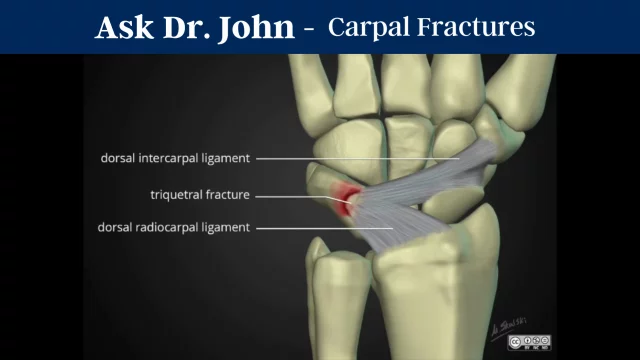
Ask Dr. John – Carpal Fracture
On this episode of Ask Dr. John, our Lawyer and Physician, Dr. John, talks with us about Carpal Fractures. Through Dr. John’s education, training and experience he has been able to identify, diagnose and treat carpal fractures. In this episode, Dr. John educates us on what a carpal fracture is, [...]
Watch Video
Ask Dr. John – Carpal Tunnel Syndrome
This episode, Dr. John, our Lawyer and Physician, uses his prior education and experience to help educate us on Carpal Tunnel Syndrome, what it is, the anatomy to understand the injury, how it may be treated and what to expect in the future if you suffer this injury.
Watch Video
Ask Dr. John – Cervical Disc Herniation
On this episode of Ask Dr. John, our Lawyer and Physician, Dr. John helps educate us on the anatomy, causes, symptoms, and potential treatments of Cervical Disc Herniation injuries.
Watch Video
Ask Dr. John – Rotator Cuff
This episode of Ask Dr. John, Attorney Marc Diller asks our Lawyer and Physician, Dr. John questions about Rotator Cuff tears. Dr. John uses his education, knowledge and experiences to help educate us on what a rotator cuff injury is, the anatomy behind it, and what someone can expect if [...]
Watch Video
Ask Dr. John – Meniscus Knee Injuries
This episode of Ask Dr. John, our Lawyer and Physician Dr. John explains what meniscus knee injuries are and why they are significant injuries. He also uses his education, knowledge and experience to educate us on the anatomy, symptoms and what to expect in the future if you ever suffer [...]
Watch Video
Ask Dr. John – TFCC
On this episode of Ask Dr. John, our Lawyer and Physician, Dr. John educates us about what a TFCC injury is. A TFCC injury is known as a triangular fibrocartilage complex and they are serious injuries that someone may experience. To learn more about these injuries, the anatomy behind them [...]
Watch Video
Ask Dr John – Growth Plate Injuries
On our first episode of Ask Dr. John, our very own Lawyer and Physician, Dr. John, talks with us about Growth Plate Fractures. Watch our video to learn what the growth plate is, how it can be injured and what that means for recovery.
Watch Video